Staked MOR session lifecycle
For your own consumer node: open escrow, close, unused back now, used locked until the next UTC day. On-chain protocol staking — not the API Gateway credit model. The catalog walk before open is what active.mor.org photographs for the whole network.
End-to-end flow
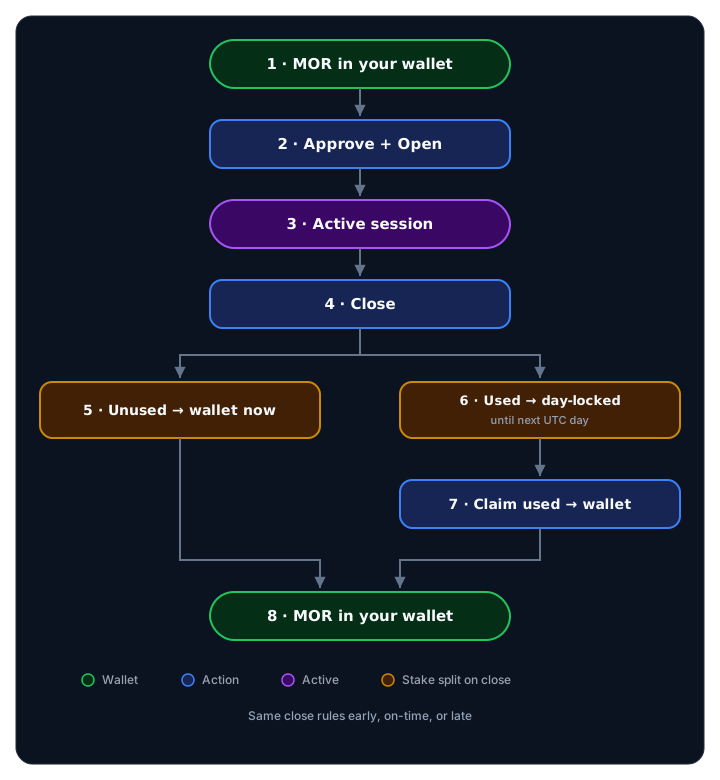
Walkthrough
1. MOR starts in your wallet.
2. You open a session. That MOR is escrowed in the Inference Contract for the session length (set from stake and price).
3. While open, the session is active — stake is reserved for inference.
4. Someone submits close (your node after the end time, or you via API). Timing does not change the rules below — early, on-time, or a bit late is still just close.
5–6. On close, stake splits two ways:
- Unused — returned to your wallet in that same close transaction. Ran the whole session? Unused is ~0 (nothing left over).
- Used — day-locked in the contract until the next UTC day. Ran the whole session? That’s essentially all of your stake, locked until then.
7–8. After the lock lifts, claim the used slice (app withdraw flow, or withdrawUserStakes). It does not auto-return. Plan float for gross daily stake — used MOR cannot open another session the same UTC day.
The clock hitting zero does not close by itself; a close transaction still has to land. If it never does, stake stays active until it does. Funding / gas issues below.
Check a consumer wallet (read-only)
Enter your consumer address to see an on-chain snapshot on Base: the same three places as the diagram — in your wallet, active in the Inference Contract (open sessions), and on hold in the Inference Contract (used-stipend day-lock queue). Uses a small sample of your newest sessions so the page stays fast; use Scanner technical details for the full breakdown. If the default RPC fails in your browser, paste another Base HTTPS endpoint.
Where your MOR is
Rough check only. The Snapshot cards below are the three buckets; the large total is their sum for this scan.
Snapshot
Spendable MOR in your address.
Stake in sessions that are still open on-chain (not closed yet).
When closes fail or balances look “stuck”
Close is one blockchain transaction. It needs gas and a solvent protocol funding wallet (separate from yours) to pay the provider. If funding or approval is short, the whole close fails and your stake stays in an active session until a close succeeds.
- Provider payment pool empty or blocked. Until operators fix MOR balance / approval on the funding wallet, no session can close.
- No ETH for gas on the wallet that submits close.
- Closed, but MOR is on hold. Used stake day-locks until the next UTC day — then claim it. It will not move by itself.
- End time passed, session still open. Close never landed (node offline, gas, or funding failure above).
- Wallet checker looks short. This page only samples your newest sessions; expand Scanner technical details or use an explorer for the rest.